Eastside Utility District's top priority is providing you with consistently safe drinking water.
What are customer water service lines?
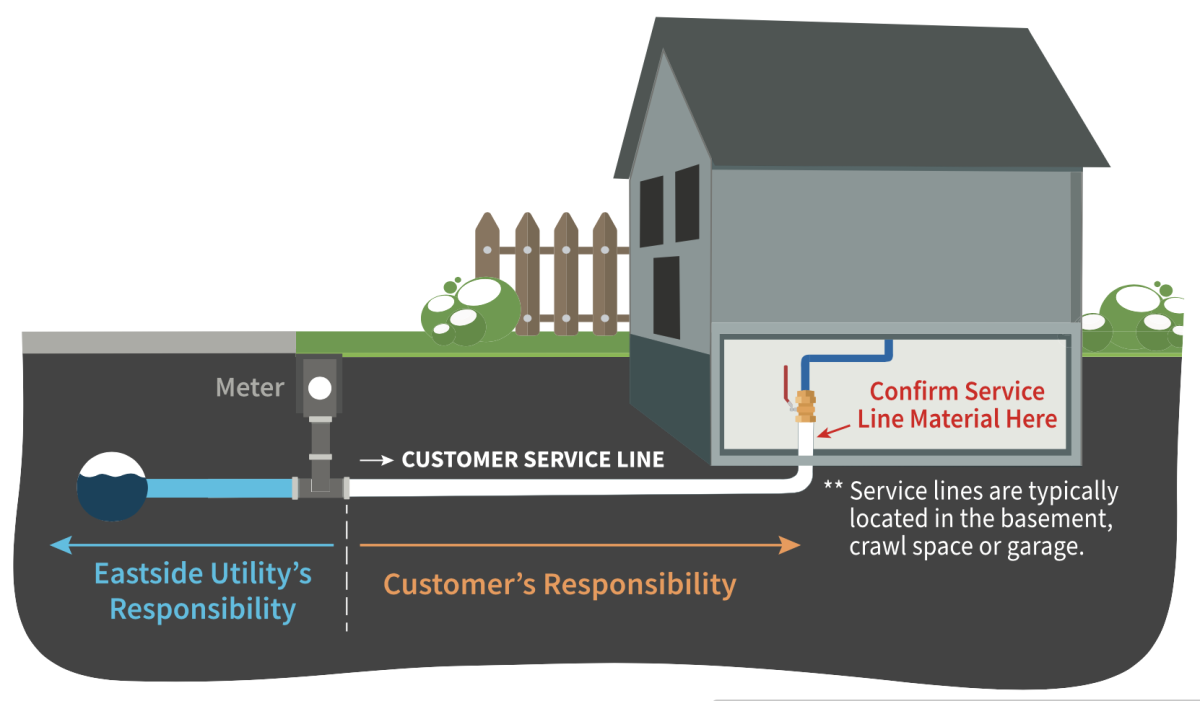
The customer water service line is the pipe that connects a building or property to the municipal water supply system. It carries water from the public main, through the meter, and into the plumbing inside the home or business for everyday uses such as drinking, cooking, and washing.
In Tennessee, residential service lines are most often 3/4 inch to 1 inch in diameter. They are commonly found entering the building through a basement, crawl space, or garage near the main shut-off valve. Service lines can be made from a variety of materials depending on when they were installed, including copper, galvanized steel, lead, brass, or plastic piping such as PVC.
On the customer side, the service line may reflect the material that was selected at the time the property was built. If any portion of the pipe is lead, it is referred to as a lead service line (LSL).
The property owner owns and is responsible for the section of the service line that runs from the meter to the building, as well as the plumbing inside the property.
How to Locate and Identify Your Water Service Line Material
Watch this video to learn how to locate and identify your water service line material. The information will support compliance with new regulatory requirements and help identify potential lead sources for future action.
How-To Submit your Service Line Material Test Results
When you are ready to begin the survey, click the button below.
Performing the MAgnetic & Scratch Test
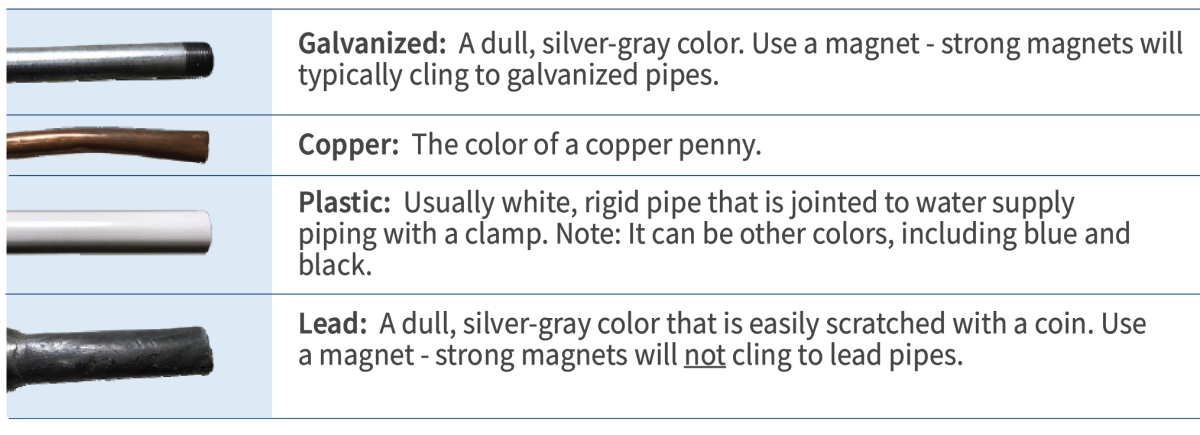
- Find your water service line (water pipe). It is usually located in the garage or crawl-space where it enters the building from an exterior wall and is connected to a shut off valve. Gently scratch the pipe’s surface using a key, coin, or strong refrigerator magnet.
- If the magnet adheres, the pipe is made of steel, not lead. Ensure to only create a superficial scratch. Please note that simply having a lead service line does not mean your home's water has high levels of lead in your drinking water.
Report your findings in our service line inventory survey.
Typical service line pipe materials include copper, galvanized steel, plastic, and lead as shown below:
What is EUD doing to reduce the potential for lead exposure in drinking water?
EUD consistently follows and stays current with all EPA and TDEC health and safety guidelines and mandates including:
Consistent Testing & Corrosion Control:
We routinely collect samples across our entire distribution area to monitor and assess the effectiveness of our lead corrosion control treatment.
Infrastructure Upgrades:
We are continuing our water main replacement program, replacing the oldest pipes in the system, which includes utility owned portion of lead service lines if present.
Service Line Identification:
We are actively working to identify all drinking water service line materials throughout the water supply and are proactively preparing for compliance with the EPA's Lead and Copper Rule.
Education and Awareness:
We are committed to providing increased education about lead in drinking water and encouraging customers to take action on lead service lines in the community to reduce the potential risk of lead exposure.
Is EUD treating their water to avoid lead getting into water pipes?
Yes. As required by the EPA and LCR regulations, Eastside Utility District treats their drinking water to control corrosiveness. The most recent testing result data notes they remain in compliance with all current EPA and TDEC standards.
For more information, please refer to EUD's 2025 Water Quality Report
Click here for more Service Line Material FAQ's
For more information on reducing lead exposure around your home/building and the health effects of lead, visit EPA's website at www.epa.gov/lead, or contact your health care provider or local health department.

Related Links
Related Links