Lead & Copper Rule Revision
LCRR
Frequently Asked Questions
To meet TDEC and EPA requirements, Eastside Utility has created an inventory of service line materials and we need your help to identify any potential lead and galvanized pipe materials that could be found on the public side.
Use the interactive map to enter your address and check the the status of your water service line material for your property.
What is lead and how does it get into drinking water?
Lead is a naturally occurring metal that can be harmful if inhaled or swallowed. According to the Tennessee Department of Environment and Conservation, lead can be found in some metal water taps, interior water pipes, or pipes connecting a house to the main water pipe in the street. Lead found in tap water usually comes from the corrosion of older fixtures or from the solder that connects pipes. When water sits in leaded pipes for several hours, lead can leach into the water supply.
For more information on lead in drinking water, visit TDEC's Website.
Are there health risks associated with lead in drinking water?
Is EUD treating their water to avoid lead getting into water pipes?
What is EUD doing to reduce the potential for lead exposure in drinking water?
What is a service line?
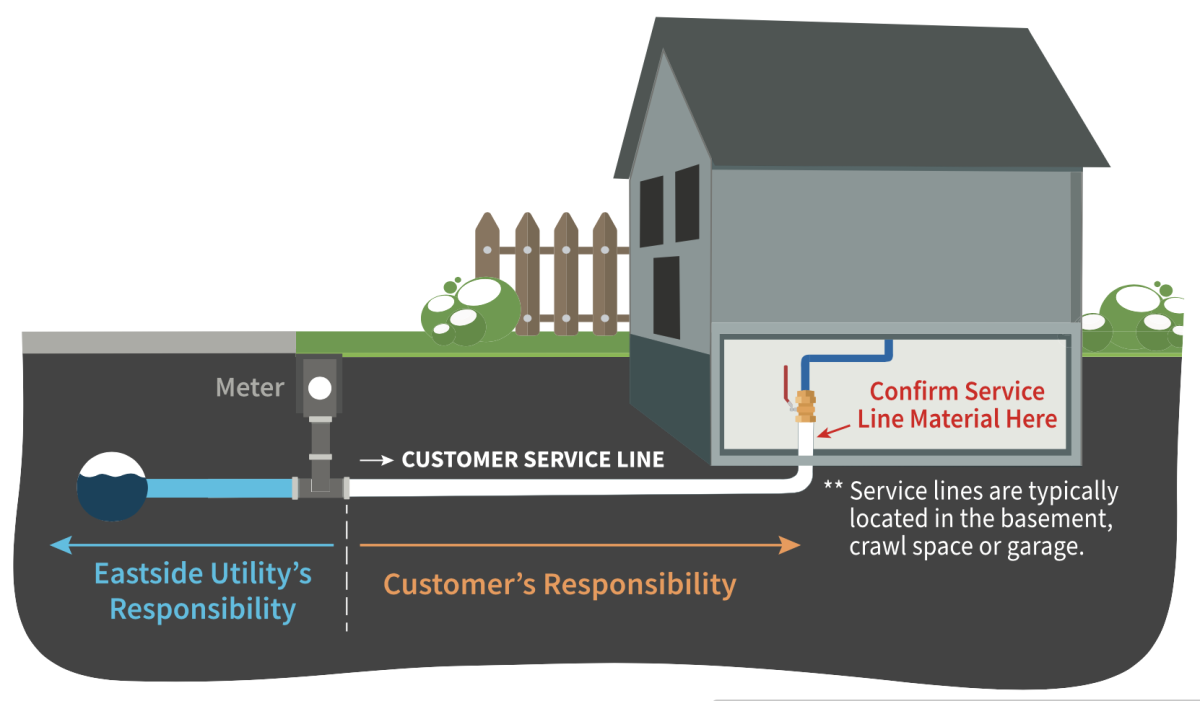
Are there ways I can check for lead where I live or work?
I've completed a scratch test and I'm concerned my service line may have lead plumbing. What are my next steps?
Will EUD pay to replace my lead service line?
Are there ways I can reduce my exposure to lead in my drinking water?
Where can I find more information about lead in drinking water?

To ensure the quality and safety of the water supplied to our customers, the State of Tennessee and EPA requires us to routinely test the water supplied for both “regulated” and “un-regulated” containments. We are pleased to inform you we are in compliance with all State and Federal water quality requirements. Copies of those test analysis are available upon request.

Related Links
Related Links